Classroom Design: Use it to Cue the Behavior You Want to See
Oct 11, 2026

Edward Sidley, MA, BCBA
October 14, 2026
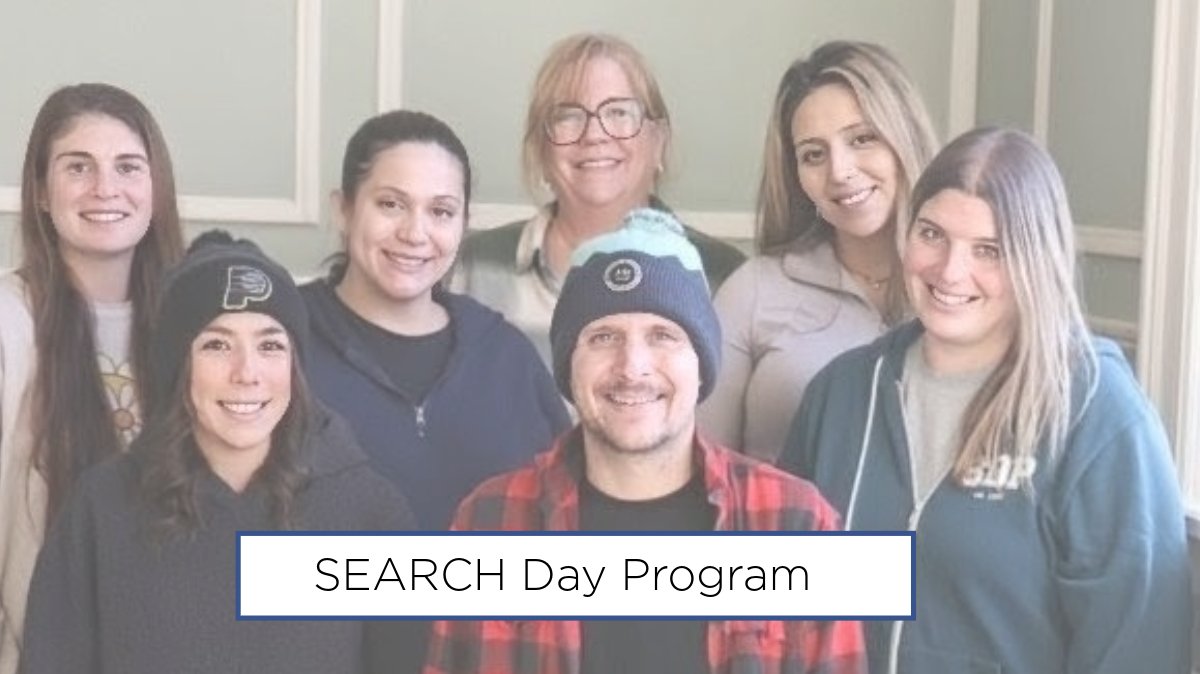
Guest article written by members of the SEARCH Day Program team: Ed Sidley, Ashley McParland, Patti Kriews, Jamie Kelly, Brianna Venesco, Sarah Zieden-Weber, and Nayeli Strong.
SEARCH Day Program is a private, non-profit school (75 students; ages 3-21) in Ocean Township, New Jersey. The school embraces research-based teaching strategies that are derived from applied behavior analysis while taking a multi-discipline approach to educating individuals with Autism. This article will discuss the school’s adopting of the Essential for Living (EFL) curriculum (McGreevy et al., 2014) within an Event-Based Teaching context (Montgomery & Beal-Wilkinson, 2024), the action steps taken, and the rationale behind the shift.
For readers new to the framework, Essential for Living is a comprehensive functional life skills curriculum and assessment referenced to quality of life for children and adults with moderate-to-severe disabilities.
The jump from 21 to adulthood for individuals with ASD is fraught with challenges. The differences between the classroom and adult programming are stark. Learners lacking essential skills and needing high levels of support often have fewer opportunities which can lead to lower qualities of life as they age. This article is intended to help behavior analysts, educators, and parents focus on the meaningful skills that will translate into a learner's adulthood. It will describe Event-Based Teaching and the shift that our school underwent in its approach to serving our transitional age students. Functional academics, daily living skills, vocational tasks, social interactions, etc. are all taught using real materials and within the appropriate group contexts. The reader will also learn how the EFL curriculum can be used in conjunction with learners participating in a Skill Based Treatment (Hanley et al., 2014) as an intervention for severe behavior.
While undertaking the Event-Based Teaching initiative and shift in transitional programming, the SEARCH team worked with experts from around the country. Kristina Montgomery and Emily Beal-Wilkinson, BCBAs from Victory Academy (Oregon), met with the SEARCH team for professional development and consultation on the school’s initiative. Kristina and Emily have partnered with the EFL team in the development of the Event-Based teaching workshops and training. Lastly, Troy Fry, BCBA and co-author of the Essential for Living curriculum, visited the campus for 2-days of professional development and classroom consultation.
EFL is a comprehensive functional, life skills curriculum designed for children and adults with moderate-to-severe disabilities who present limited skill repertoires and challenging behavior. For many learners, difficulties acquiring complex concepts will often continue to function as barriers to the acquisition of additional language skills and academic skills, even with high quality instruction. In these cases, expectations consistent with safe, effective, and high-quality engagement across relevant and meaningful settings should be considered and EFL can be used to guide further instruction (McGreevy et al., 2021).
In order to provide students with multiple opportunities to learn and practice skills within the EFL, the team at SEARCH began a shift towards Event-Based Teaching. This approach is centered on events - meaningful, real-life activities that are frequently repeated. Event-Based Teaching then teaches skills in the context of those meaningful, repeatable events. All skills are taught in the context in which they will be required (Montgomery & Beal-Wilkinson, 2024). For example, a student learning to identify a toothbrush would do so in the context of brushing his/her teeth in the bathroom. Events may be part of daily routines (such as morning arrival, meal times, or hygiene) or part of larger special events (such as holiday parties or movie days). This in-context approach connects functional life skills instruction to daily routines, naturally occurring opportunities, and outcomes that matter in family, school, community, and adult settings.
At SEARCH, we have designated Event-Based Teaching into several categories which we found helpful in the development of a school systems approach. Within an event, we break down the skills into group, partner, and individual jobs with each job then further broken down into the tasks needed to complete the job. We also categorize Event-Based Teaching into pre-events (i.e., some of the bigger “events” have multiple activities in advance to prep), routines (e.g., morning arrival routine) and special events (e.g., holiday parties). The development of these systems has been an effective way to harness and leverage many of the potential learning opportunities available in a school setting.
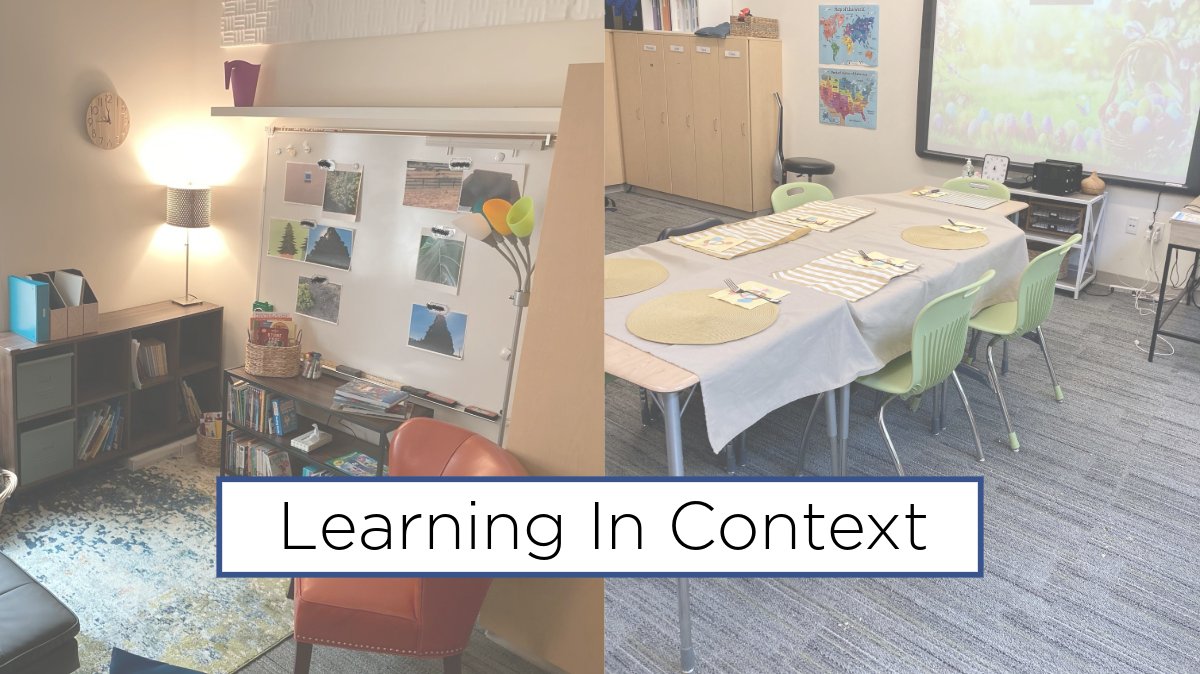
So what changes to the environment are needed to better support the use of EFL and Event-Based Teaching? To start, individual desks were changed to tables to encourage a more community atmosphere, while building tolerance for sitting with peers, participating with shared activities, and cooperating under divided staff attention. It is worth noting that individual desks are still available for learners who need additional space, more direct 1:1 skills practice, or time away from the group. New classroom areas were also created to simulate real-life environments.
In the transitional classrooms, one will find a living room space with couches, chairs, tables, and shelving; additionally, each classroom has a kitchen area equipped with air fryers, blenders, toasters, and food supplies. These areas have clearly defined expectations outlining what tasks or activities are to be completed in the particular space.
In addition to the changes made to educational instruction in the classroom, Speech and OT services for transitional age students have shifted to IEP-driven group-based sessions. SLPs and OTs provide therapy in small, structured groups that often complement the “events” and “pre-events” within the classroom. While SEARCH already had a Structured Learning Experience (SLE) program, over the past year changes were made to make it more robust and inclusive. The number of job sites for SLE increased allowing more students to work off-campus; in addition, an on-campus work program was created in which local establishments provide job tasks to be completed on campus for those students who are not quite ready to have jobs in the community. Lastly, the campus school store is operated by students, who work assigned shifts and complete specific tasks as part of their responsibilities.
In the Winter 2021 and Winter 2022 issues of Autism Spectrum News, SEARCH Board Certified Behavior Analysts (BCBAs) described their implementation of the interview-informed synthesized contingency analysis (IISCA) and skill-based treatment (SBT) as an intervention for severe behavior in their school setting (Hanley et al., 2014; Sidley, McParland & Algor, 2021; Sidley, McParland & Algor, 2022).
For the transitional age students who participate in SBT, Event-Based Teaching contexts align with the contextually appropriate behavior (CAB) branches of their individual programming. Said another way, participation in the “event” learning context becomes the expected behavior following the students’ use of functional communication, toleration, relinquishing preferred items, and transitioning. Additionally, the essential skills highlighted by the EFL curriculum (e.g., daily living skills, tolerance, participation in a group, etc.) work well as designated CAB branches within an SBT program (Montgomery & Beal-Wilkinson, 2024). The Essential Eight offers additional context for several of these priorities, including making requests, waiting, accepting removals and transitions, completing required tasks, following health and safety directions, and completing daily living skills.
As our program shifted in our transitional classrooms, it became clear that younger students would also benefit from aspects of Event-Based Teaching. Event-Based Teaching has been integrated into our elementary classrooms by building independence within established routines (i.e. arrival, lunch, dismissal, and group instruction). This shift required training for staff to recognize meaningful learning opportunities. During morning routines, students are encouraged to independently (or with systematic prompting) identify lockers, unpack their belongings, and transition to their classroom. Lunch routines include setting the table, heating up lunches, sitting as a group, and cleaning up. Group activities have become repeatable and lead to a purposeful goal or larger theme (i.e. making a snack themed for a holiday party). Throughout all routines, students receive frequent opportunities to practice transitioning from preferred activities, sitting with peers, turn taking, retrieving materials, responding to staff/peers, waiting, toleration, and many other functional skills.
The initially proposed title for this article, and the title of a recent workshop at the 2025 Autism NJ Conference (Sidley & Kriews, 2025), was “Classroom Desks do Not Generalize.” The title was inspired by the work and commentary of Dr. Peter Gerhardt (Director of EPIC Schools, NJ) who frequently promotes the early preparation for life after 21. There is a great need to start working on essential skills as soon as possible. Sitting 1:1 at a desk with a teacher does not mirror the social contexts which individuals will need to navigate once they leave school. The staff-to-participant ratios in adult support services are very different (i.e., larger ratios) compared to the available support in a school setting. The more support individuals need in their adult years will directly impact and limit their opportunities for experiencing preferred activities and locations within the community; thus making their worlds smaller. Can the individual sit with a group? Does the individual have an effective means of communication? Can the individual transition to planned and at times unplanned locations safely and without engaging in severe behavior? The aim of using EFL and Event-Based Teaching for school age students is to expose them to what life after 21 will look like, while teaching them the essential skills needed for those contexts.
Ready to strengthen functional life skills instruction in your school or program? Explore Essential for Living training and consultation options to find support for implementing EFL and Event-Based Teaching.
Hanley, G. P., Jin, C. S., Vanselow, N. R., & Hanratty, L. A. (2014). Producing meaningful improvements in problem behavior of children with autism via synthesized analyses and treatments. JABA, 47, 16-36.
McGreevy, P., Fry, T., & Cornwall, C. (2012, 2014, 2017, 2019, 2023). Essential for living. Orlando, FL: Patrick McGreevy, Ph.D., P.A. and Associates.
McGreevy, P., Fry, T., & Cornwall, C. (2021). Essential for living: A journey to life skills. Essential for Living, Inc.
Montgomery, K., & Wilkinson, E. B. (2024). Introduction to Event-Based Teaching
Sidley, E. and Kriews, P. (2025). Classroom Desks Do Not Generalize to Adulthood: Shifting Transitional Programming to Event Based Teaching Using the Essential For Living Curriculum [Webinar]. BehaviorLive: https://behaviorlive.com/courses/classroom-desks-do-not-generalize-to-adulthood-shifting-transitional-programming
Sidley, E., McParland, A., Algor, K. (2022). Generalization and Extension of a Skill Based Treatment in a School Setting. Autism Spectrum News: https://autismspectrumnews.org/generalization-and-extension-of-the-skill-based-treatment-in-a-school-setting/
Sidley, E., McParland, A., Algor, K. (2021). Achieving Meaningful Behavioral Outcomes in a School Setting. Autism Spectrum News: https://www.autismspectrumnews.org/achieving-meaningful-behavioral-outcomes-in-the-school-setting/
Browse the complete Essential for Living collection — books, bundles, and digital resources for ABA professionals and educators.
Información, novedades y recursos para profesionales de ABA, educadores y padres.